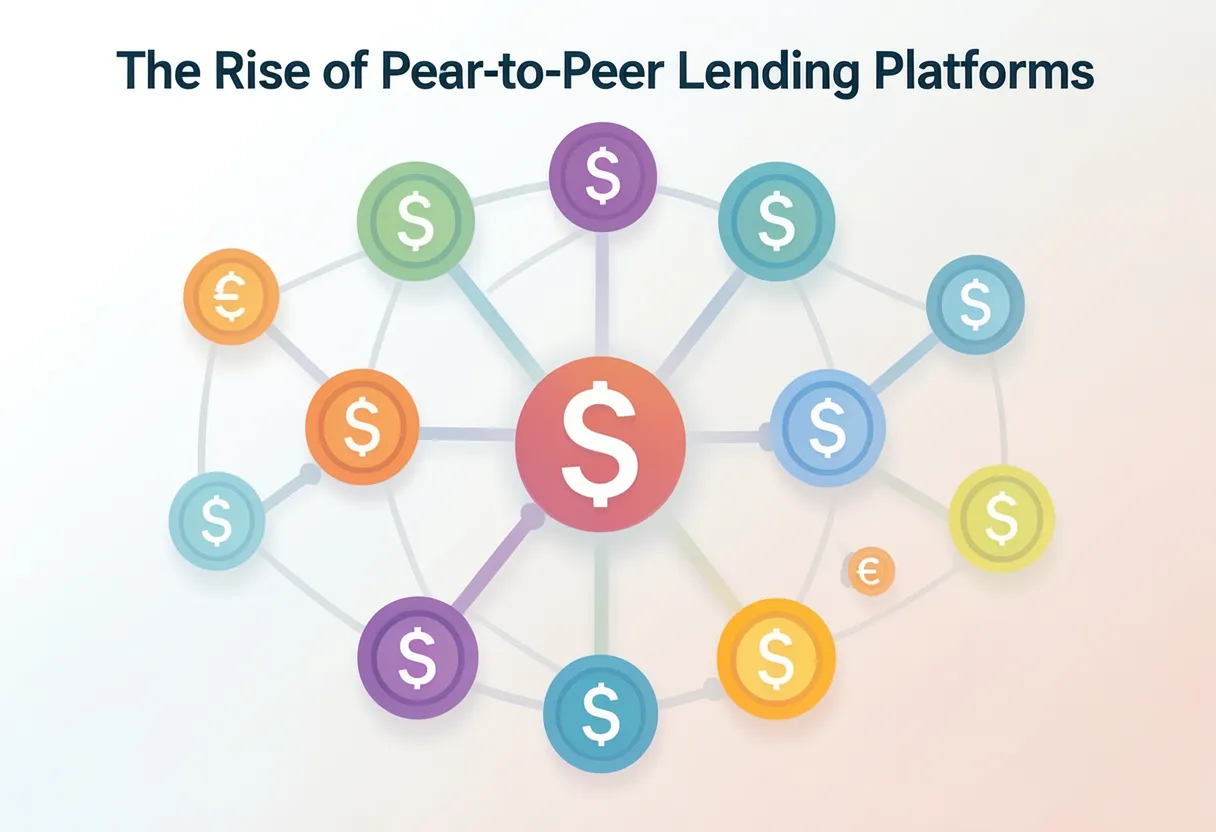
The Rise of Peer-to-Peer Lending Platforms
The financial services industry has undergone significant digital transformation over the last decade, and one of the most disruptive innovations has been the emergence of peer-to-peer (P2P) lending platforms. These online marketplaces connect borrowers directly with investors, eliminating many of the traditional intermediaries associated with conventional banking systems. By leveraging financial technology, automation, artificial intelligence, and digital underwriting systems, peer-to-peer lending platforms have created new opportunities for borrowers seeking accessible financing and investors searching for alternative income-generating assets.
As demand for flexible credit solutions grows and technology continues to reshape financial markets, P2P lending has become an important component of the global fintech ecosystem. The industry has expanded from personal loans into business financing, real estate funding, invoice financing, student loans, and specialized lending sectors.
Understanding how peer-to-peer lending platforms operate, their advantages, risks, technological foundations, and future growth potential is essential for investors, borrowers, entrepreneurs, and financial professionals navigating modern lending markets.
What Is Peer-to-Peer Lending?
Peer-to-peer lending is a financial model that enables individuals or businesses to borrow money directly from investors through an online platform. Rather than obtaining funding exclusively from banks or credit unions, borrowers can access capital from multiple investors willing to fund all or part of a loan request.
P2P platforms serve as intermediaries that facilitate:
- Borrower applications
- Credit assessments
- Risk evaluation
- Loan matching
- Payment processing
- Investor reporting
- Regulatory compliance
The result is a more efficient marketplace where lenders and borrowers interact through technology-driven financial infrastructure.
| Traditional Lending | Peer-to-Peer Lending |
|---|---|
| Bank Intermediary | Direct Investor Funding |
| Manual Underwriting | Automated Assessment |
| Long Approval Process | Fast Digital Approvals |
| Limited Funding Sources | Multiple Investors |
| Higher Operating Costs | Technology-Driven Efficiency |
The Evolution of P2P Lending
The concept of peer-to-peer lending emerged alongside the growth of financial technology and online marketplaces. Early platforms focused primarily on personal consumer loans, but technological advances and increasing investor confidence have expanded the market significantly.
Modern P2P lending now includes:
- Personal loans
- Business loans
- Real estate financing
- Equipment financing
- Invoice funding
- Education financing
- Specialized commercial lending
The evolution of lending technology has made P2P financing a viable alternative to traditional banking solutions.
How Peer-to-Peer Lending Platforms Work
Peer-to-peer lending platforms follow a streamlined digital process that benefits both borrowers and investors.
- Borrowers submit loan applications online.
- The platform evaluates creditworthiness.
- Risk scores and interest rates are assigned.
- Loan opportunities are presented to investors.
- Investors fund part or all of the loan.
- Borrowers make monthly repayments.
- Investors receive principal and interest payments.
This process reduces administrative overhead while increasing access to capital.
Technology Driving Marketplace Lending
Technology is the foundation of modern peer-to-peer lending platforms.
Key technologies include:
- Artificial intelligence
- Machine learning
- Cloud computing
- Big data analytics
- Automated underwriting systems
- Digital identity verification
- Fraud detection software
These technologies improve efficiency, reduce risk, and enhance user experiences.
Benefits for Borrowers
P2P lending offers numerous advantages for borrowers seeking financing.
- Fast approval processes
- Competitive interest rates
- Flexible qualification requirements
- Online convenience
- Lower operational costs
- Broader access to credit
Many borrowers who struggle to secure traditional bank loans find alternative opportunities through marketplace lending platforms.
Benefits for Investors
Investors are increasingly attracted to P2P lending because it offers diversification and potential income opportunities.
Advantages include:
- Regular cash flow
- Portfolio diversification
- Alternative investment exposure
- Passive income generation
- Access to consumer credit markets
- Digital portfolio management
P2P loans can complement traditional investments such as stocks, bonds, and real estate.
| Investor Benefit | Potential Value |
|---|---|
| Income Generation | Interest Payments |
| Diversification | Alternative Asset Exposure |
| Accessibility | Lower Investment Minimums |
| Transparency | Detailed Loan Information |
| Automation | Efficient Portfolio Management |
Artificial Intelligence and Credit Assessment
Traditional lending institutions often rely heavily on credit scores and manual underwriting processes. Modern P2P platforms use artificial intelligence and machine learning to evaluate borrowers more comprehensively.
Factors analyzed may include:
- Credit history
- Income stability
- Debt-to-income ratios
- Employment history
- Payment behavior
- Alternative financial data
AI-driven assessments help improve risk prediction and lending decisions.
Risk Management in Peer-to-Peer Lending
Risk management remains critical for platform sustainability.
P2P platforms implement various controls including:
- Borrower screening
- Credit grading systems
- Portfolio diversification tools
- Automated monitoring
- Fraud prevention technologies
- Regulatory compliance programs
These measures help reduce default rates and improve investor confidence.
Interest Rates and Loan Pricing
Interest rates within peer-to-peer lending marketplaces are generally determined based on borrower risk profiles.
Factors affecting pricing include:
- Creditworthiness
- Loan term
- Income stability
- Economic conditions
- Market demand
- Platform risk models
Higher-risk borrowers typically receive higher interest rates, while lower-risk borrowers may qualify for more favorable terms.
Small Business Financing Through P2P Platforms
Small businesses often face challenges obtaining traditional bank financing. P2P lending platforms help bridge this gap by offering faster and more flexible funding solutions.
Business owners use marketplace lending for:
- Working capital
- Equipment purchases
- Inventory financing
- Business expansion
- Marketing investments
- Cash flow management
Digital lending has become an important financing source for growing businesses.
Real Estate Crowdlending
Real estate financing has become a major segment within peer-to-peer lending.
Crowdlending platforms allow investors to participate in:
- Commercial real estate loans
- Residential development projects
- Bridge financing
- Property renovation funding
- Construction lending
This provides access to real estate markets without direct property ownership.
Regulatory Considerations
As the industry has matured, regulators worldwide have implemented frameworks to protect investors and borrowers.
Key areas of oversight include:
- Investor disclosures
- Consumer protection
- Anti-money laundering compliance
- Data privacy standards
- Operational transparency
- Financial reporting requirements
Strong regulatory compliance supports industry credibility and sustainable growth.
| Regulatory Focus Area | Purpose |
|---|---|
| Consumer Protection | Borrower Safeguards |
| Transparency | Investor Information |
| AML Compliance | Fraud Prevention |
| Data Security | Information Protection |
| Financial Reporting | Market Integrity |
The Role of Alternative Data
Alternative data is increasingly important in modern lending decisions.
Examples include:
- Utility payment histories
- Rental payment records
- Bank account activity
- Cash flow patterns
- Business transaction data
Using broader datasets can help improve access to credit for underserved borrowers.
Financial Inclusion and Digital Lending
One of the most significant benefits of P2P lending is its contribution to financial inclusion.
Digital lending platforms help underserved populations gain access to:
- Personal financing
- Business capital
- Credit-building opportunities
- Investment markets
This expands economic participation and promotes entrepreneurship.
Challenges Facing Peer-to-Peer Lending Platforms
Despite strong growth, the industry faces several challenges.
- Economic downturns
- Loan defaults
- Regulatory changes
- Cybersecurity threats
- Market competition
- Liquidity concerns
Successfully managing these risks remains essential for long-term industry success.
The Impact of FinTech Innovation
FinTech innovation continues to drive improvements across lending marketplaces.
Emerging technologies include:
- Predictive analytics
- AI underwriting
- Blockchain verification
- Open banking integration
- Automated investing systems
- Real-time risk monitoring
These innovations improve platform efficiency and user experiences.
Institutional Investment in P2P Lending
While P2P lending initially focused on individual investors, institutional participation has grown significantly.
Institutional investors include:
- Asset managers
- Hedge funds
- Pension funds
- Insurance companies
- Private credit firms
Their involvement has increased liquidity and expanded marketplace lending capacity.
Future Trends in Marketplace Lending
Several developments are expected to shape the future of peer-to-peer lending.
- Expanded AI-driven underwriting
- Greater automation
- Enhanced fraud prevention
- Global lending marketplaces
- Embedded lending solutions
- Advanced risk analytics
- Personalized lending experiences
Technology-driven innovation will continue transforming lending ecosystems worldwide.
Why P2P Lending Matters in Modern Finance
Peer-to-peer lending has fundamentally changed how individuals and businesses access capital. By connecting borrowers directly with investors and leveraging advanced financial technology, marketplace lending platforms create more efficient and accessible financial systems.
As consumers demand faster digital experiences and investors seek alternative opportunities, P2P lending is expected to remain an important component of the broader fintech landscape.
Conclusion
The rise of peer-to-peer lending platforms represents one of the most significant innovations in modern financial services. Through technology-driven underwriting, digital marketplaces, alternative investment opportunities, and improved access to credit, P2P lending continues to reshape global lending ecosystems.
As artificial intelligence, automation, open banking, and fintech innovation continue advancing, peer-to-peer lending platforms are likely to play an even larger role in personal finance, business funding, wealth creation, and financial inclusion. Investors, borrowers, and financial institutions that understand these trends will be better positioned to benefit from the ongoing evolution of digital lending markets.